The Private Note Due-Diligence Checklist
Ten questions to answer before a dollar moves, in order. If any layer fails, there is no deal. This is the checklist I'd want any borrower to answer, including me.
 Dan WilsonReal estate investor and private lender
- 01Vet the operatorThe person you would be trusting with the money. Two questions.
- 02Vet the dealThe house, the loan, and the cushion between them. Five questions.
- 03Vet the paperwork and termsThe documents that make the note real. Three questions.
One rule. A weak answer on any layer ends the conversation, no matter how good the rest looks.
Print the one-page version (PDF)Vet the operator
Questions 1 and 2. The borrower matters more than the house.
- Can I verify their track record independently? Closed deals and references from title companies and past lenders, never their own highlight reel. Run a background and litigation check. A legitimate operator expects this.
- What keeps this operator committed if things get hard? Skin in the game matters most when the property produces no income and walking away is cheap. On a cash-flowing, amortizing deal, the operator builds equity with every payment. Know which kind of deal you are in.
Vet the deal
Questions 3 to 7. What the house is worth, who is ahead of you, and how the money comes back.
- Do I know what the property is worth, from evidence I trust? An independent appraisal or broker opinion, or your own comps if you can run them. The borrower's number taken on faith is a fake cushion.
- What position am I in, and what sits ahead of me? Second position behind a bank is common in private lending. A senior foreclosure can wipe a junior claim off the property, so know every senior lien before you accept that position.
- How is this loan actually being paid back? Rent already in place, the operator's pocket, or hope? If construction: has this operator done this scale of work in this market? If rental: market rent against all expenses, and who manages.
- What is my cushion, and which way is it moving? Loan-to-value against a stressed value and real selling costs. On an interest-only note the cushion only moves if the value does; on an amortizing note it grows with every payment.
- What state is the property in, and what does foreclosure look like there? Timelines and costs vary enormously by state. See the state-by-state timelines, and understand the process where the property sits before you lend, not after.
Vet the paperwork and terms
Questions 8 to 10. The documents are the deal. Everything else is conversation.
- Is every document in place? Promissory note, recorded mortgage or deed of trust, closing through a licensed title company with a title search, hazard insurance naming you, and a lender's title policy.
- How will I see proof the property's bills stay paid? Payments tracked, and receipts showing taxes and insurance stay current for the life of the loan. A servicer is optional; verification is not.
- What is my exit? Private notes are illiquid, so never lend money you might need back sooner. Prefer notes with no balloon. If there is one, know exactly how it gets paid and what the backup plan is.
If the deal found you first. An unsolicited pitch from a stranger ("guaranteed returns," a cold message) fails this checklist at question 1. Legitimate private deals either cannot be marketed to strangers at all, or must verify an investor's finances before accepting a dollar. No qualification process means walk away. When in doubt, check the person and the deal with your state securities regulator.
The Private Lender Starter Kit
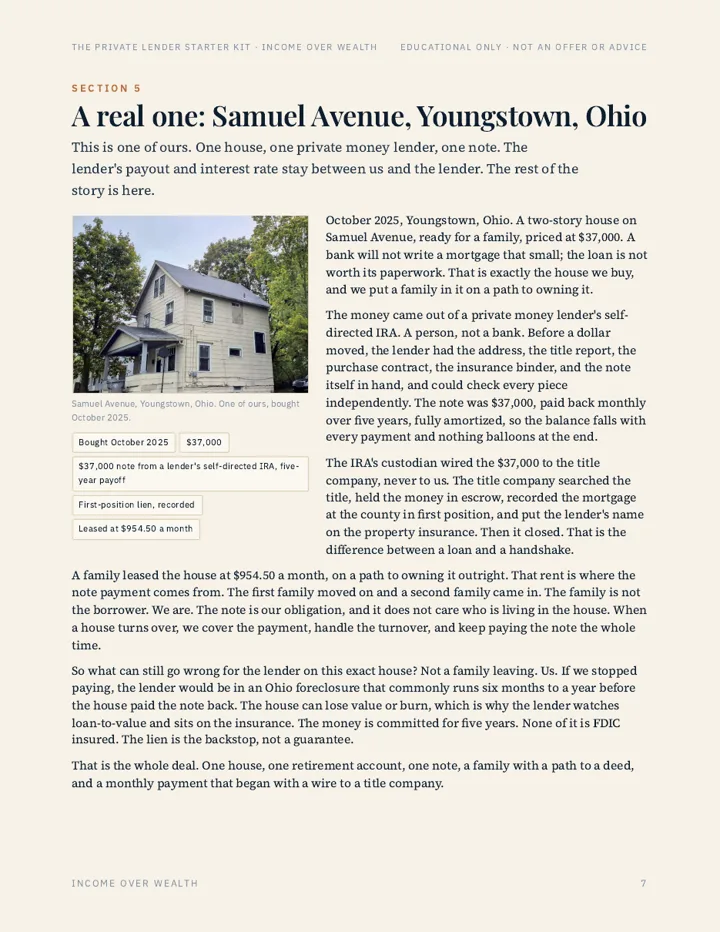
This checklist is page 19 of a free 23-page guide: what a $50,000 note pays month by month, a real $37,000 house in Youngstown, Ohio, the IRA path with eight custodians compared, and what happens when a payment is missed.
Send Me the Starter Kit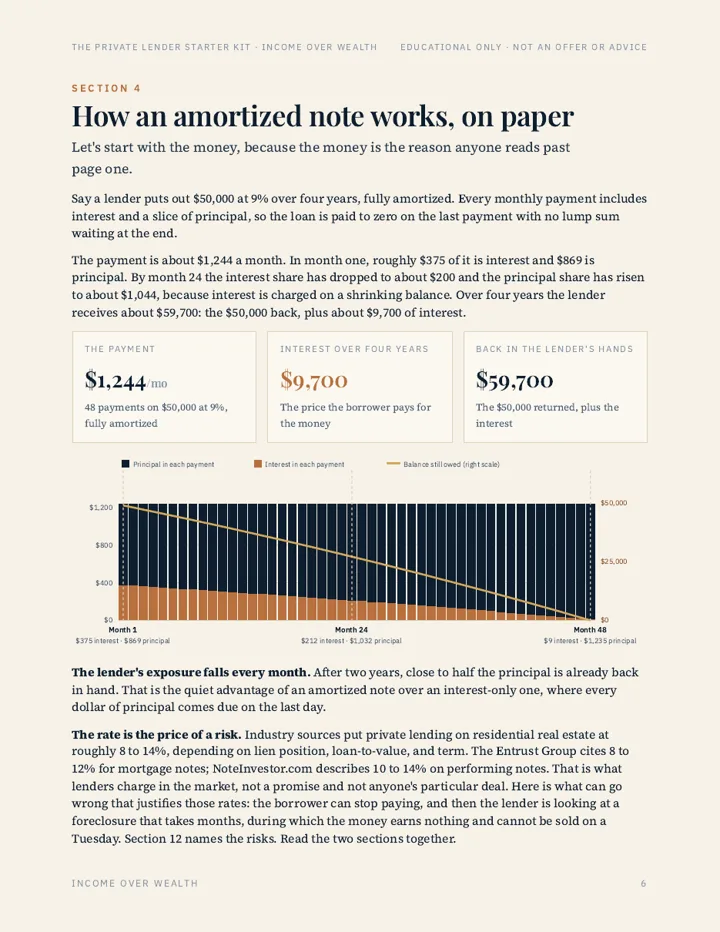
Educational content only. Nothing here is an offer to sell or a solicitation of an offer to buy any security, loan, or investment, and nothing here is legal, tax, or investment advice. Any examples are hypothetical and for illustration only. Consult your own advisors before making any financial decision.