when a layoff beats retiring
Getting laid off a few months before you retire can pay better than quitting.
If you're still working and have a retirement date in mind, here's the difference.
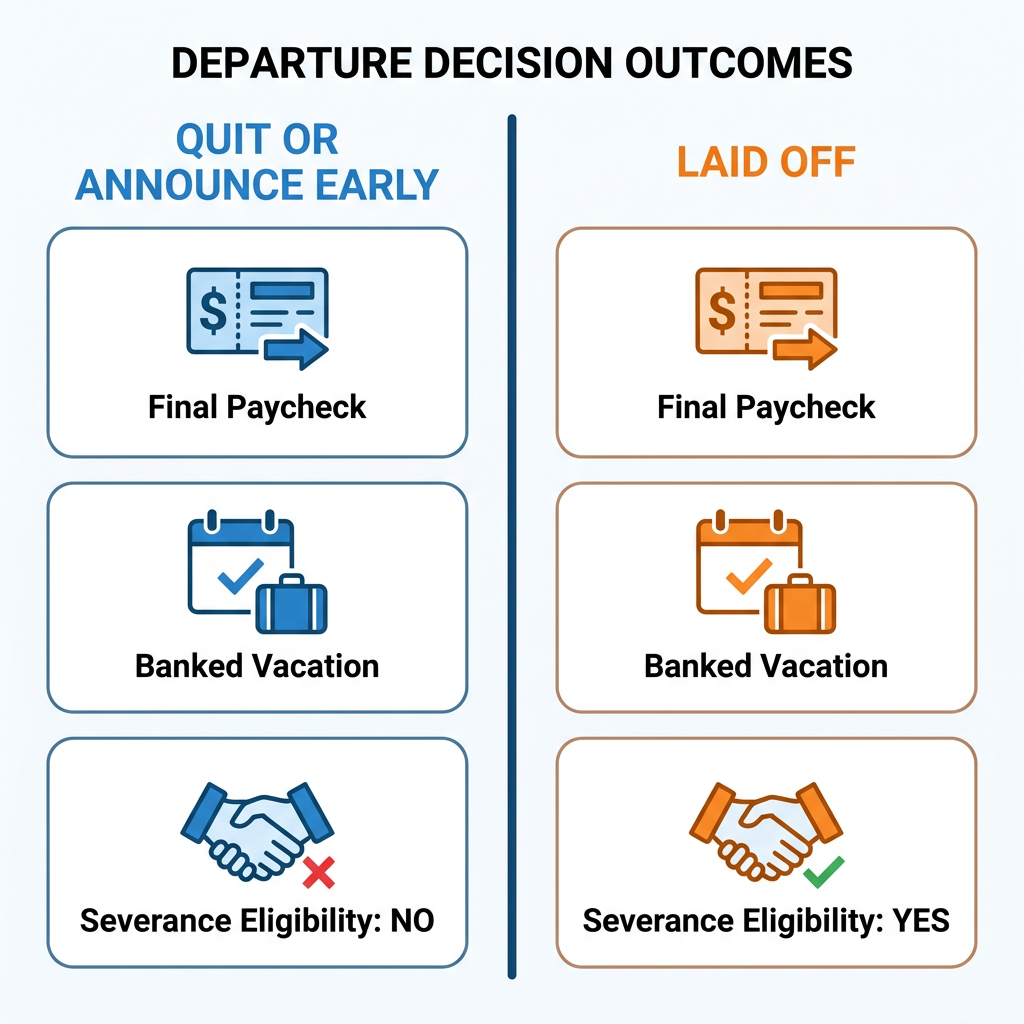
Quit, and you get your final paycheck, plus any banked vacation your state or your company's policy says they owe you.
Get laid off, and there's often severance on top of the same retirement you were already headed into.
No law requires a company to pay severance.
Plenty of them pay it anyway, and a common starting point is one to two weeks of pay for every year you worked there.
The math: say you make $90,000 and you've been there 15 years.
One to two weeks per year is 15 to 30 weeks of pay.
That's somewhere between $26,000 and $52,000, for leaving a job you were about to leave anyway.
A retirement survey this year found almost half of retirees left work earlier than they planned, and usually not by choice.
Now, don't go trying to get laid off.
You can't force it, and you'd be gambling with a paycheck you still need.
The day your boss hears you're retiring in June, paying you to go buys them nothing, so any package goes to someone they actually need to move.
Keep the date to yourself until you're ready to give notice.
If a layoff or a buyout comes through your department first, your name is still in the pool.
If it never comes, you retire exactly as planned and you've lost nothing.
I've seen the same thing on the buying side of real estate deals: the moment the other side knows your timeline, the price stops moving your way.
As promised, income over wealth in under a minute.
- Dan
If you're still working and have a retirement date in mind, here's the difference.
Quit, and you get your final paycheck, plus any banked vacation your state or your company's policy says they owe you.
Get laid off, and there's often severance on top of the same retirement you were already headed into.
No law requires a company to pay severance.
Plenty of them pay it anyway, and a common starting point is one to two weeks of pay for every year you worked there.
The math: say you make $90,000 and you've been there 15 years.
One to two weeks per year is 15 to 30 weeks of pay.
That's somewhere between $26,000 and $52,000, for leaving a job you were about to leave anyway.
A retirement survey this year found almost half of retirees left work earlier than they planned, and usually not by choice.
Now, don't go trying to get laid off.
You can't force it, and you'd be gambling with a paycheck you still need.
The day your boss hears you're retiring in June, paying you to go buys them nothing, so any package goes to someone they actually need to move.
Keep the date to yourself until you're ready to give notice.
If a layoff or a buyout comes through your department first, your name is still in the pool.
If it never comes, you retire exactly as planned and you've lost nothing.
I've seen the same thing on the buying side of real estate deals: the moment the other side knows your timeline, the price stops moving your way.
As promised, income over wealth in under a minute.
- Dan